 Skip to main content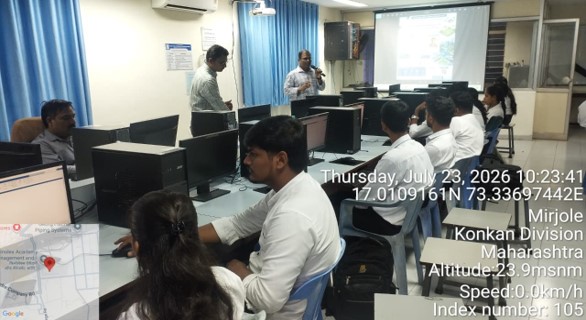
Five-Days Short-Term Training Program (STTP) on
Model-Based Design for UAVs and Self-Driving Vehicles Using MATLAB
The Department of Electrical Engineering successfully organized a Five-Day Short-Term Training Program (STTP) on “Model-Based Design for UAVs and Self-Driving Vehicles Using MATLAB” from 23–26 July 2026, followed by a Hands-on Hardware Interfacing Session on 2 August 2026 at the EN 0/6 Laboratory.
The inaugural session commenced with the felicitation of the resource person, Mr. Rohit Pawar, Application Engineer, MathWorks, DesignTech Systems Pvt. Ltd., by Dr. J. J. Mane, Head of the Department of Electrical Engineering, and Mr. D. Rajeshkumar, STTP Coordinator. They emphasized the importance of industry-oriented training and Model-Based Design in developing future-ready engineering skills.
The STTP was attended by Third-Year Electrical Engineering students and faculty members from FAMT. The technical sessions covered Model-Based Design using MATLAB & Simulink, UAV modelling and mission simulation, multi-waypoint trajectory planning, geospatial flight validation, autonomous driving and ADAS, virtual driving scenario generation, synthetic sensor data for perception and decision-making, real-time simulation, and system validation.
A major highlight of the program was the Hands-on Hardware Interfacing Session, where participants learned Arduino interfacing using MATLAB and Simulink for real-time monitoring and control. Interactive demonstrations and practical exercises provided participants with valuable exposure to simulation-driven design and embedded system implementation.
The STTP successfully enhanced participants’ knowledge of autonomous systems, UAV technologies, self-driving vehicles, and Model-Based Design methodologies. The Department of Electrical Engineering expresses its sincere gratitude to Mr. Rohit Pawar for his expert guidance and thanks all students and faculty members for their enthusiastic participation, which made the program a grand success.
Read More

