 Skip to main content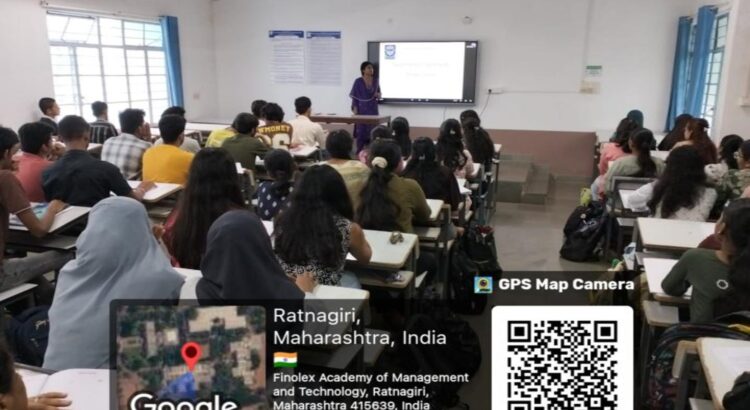
Bridge Course on Digital Logic, Fundamentals of Computer Language and Python Programming
Overview
The Department of Computer Science Engineering (AI & ML) organized a Bridge Course on Digital Logic, Fundamentals of Computer Language and Python Programming on 25 July 2026 from 9:15 AM to 5:15 PM for Semester III students. The programme was conducted to strengthen students’ understanding of core computing concepts and programming fundamentals, ensuring a smooth transition into Semester III courses.
A total of 44 students attended the bridge course. The sessions included interactive lectures and concept demonstrations enabling students to reinforce their theoretical knowledge and practical skills.
Objectives
- To strengthen the fundamentals of digital logic and computer systems.
- To introduce the basic concepts of computer language and programming.
- To enhance programming skills using Python.
- To prepare students for advanced Semester III courses in CSE (AI & ML).
Topics Covered
- Number Systems and Binary Arithmetic
- Logic Gates and Boolean Algebra
- Combinational and Sequential Logic Circuits
- Fundamentals of Computer Language
- Computer Hardware and Software Basics
- Introduction to Python Programming
- Variables, Data Types, Operators, and Expressions
- Conditional Statements and Loops
Assessment
To evaluate students’ understanding of the concepts covered during the bridge course, two quizzes were conducted.
Quiz 1 – Digital Logic and Fundamentals of Computer Language
Quiz 2 – Python Programming (Python syntax, variables, data types, operators, conditional statements, loops, functions, and basic programming exercises)
The quizzes helped assess students’ conceptual understanding and reinforced the topics covered during the sessions.
Learning Outcomes
At the end of the bridge course, students were able to:
- Explain the principles of digital logic and Boolean algebra.
- Understand the basics of computer language and computer systems.
- Apply logical reasoning to solve simple digital logic problems.
- Develop basic Python programs using programming constructs such as variables, conditions, loops, and functions.

